
Two Weeks at Serigala: Subservience, Gluttony, and Rage in a Farmer's Paradise

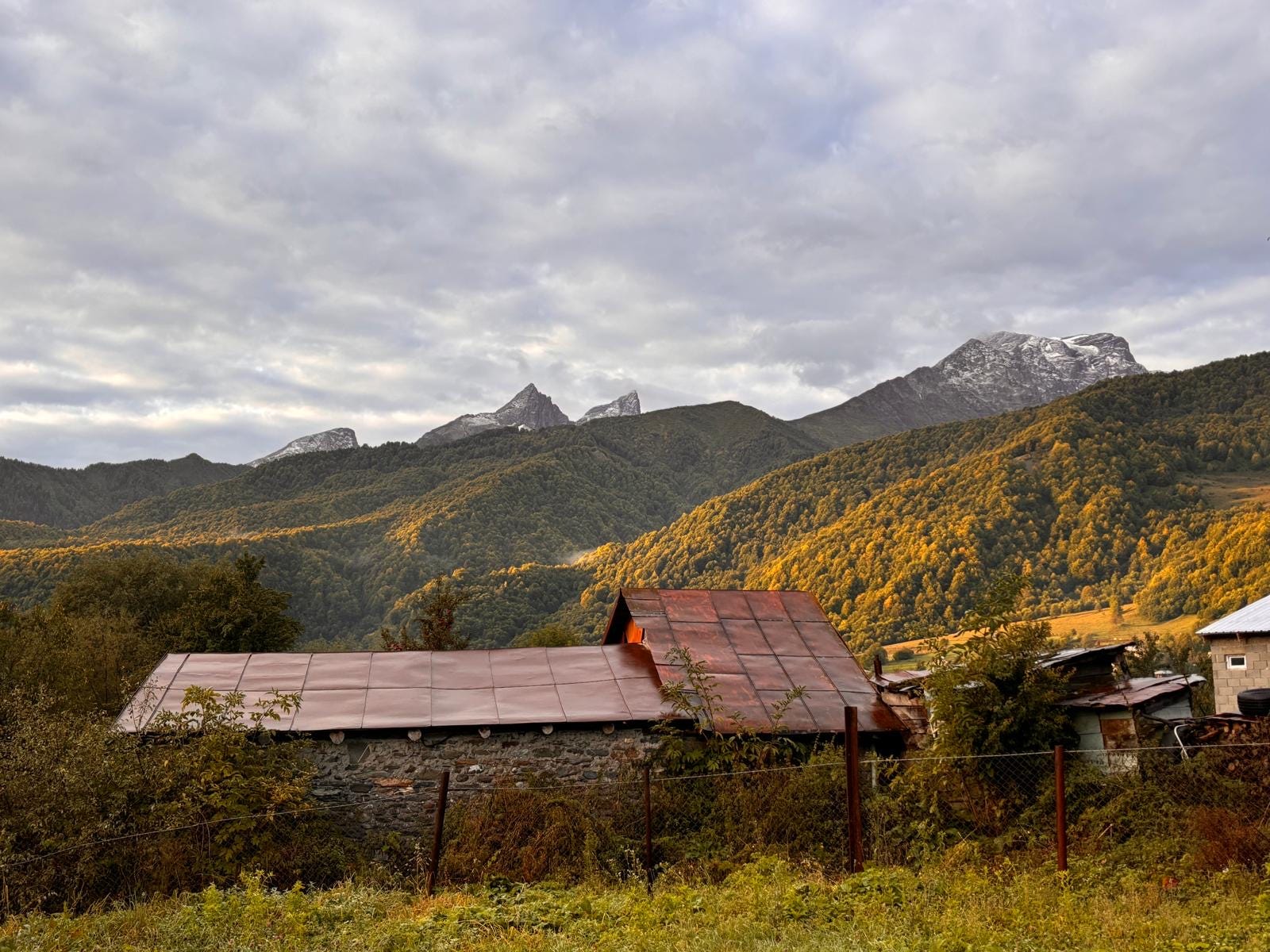
Before we were grizzled shepherds honed by the bite of early morning air and the stench of the pigpens, we were just two Americans, on the hunt for beautiful views and the idyllic “small farm” experience abroad. Ian had found Gosia’s farm, called Serigala, about a month before on a website meant to pair farmers with travelers to facilitate a sort of work and cultural exchange. The farm was in Ghebi, Georgia, a small village in the remote region of Racha, eight miles from the Russian-Georgian border. The farm also served as a guesthouse, where visitors could stay to go on horseback or hiking tours of the mountains. We knew very little about what the experience would entail––all the information we had came from two positive reviews online, a short bio that focused more on the country of Georgia than the farm itself, and some pictures of the towering mountains that overlooked the farm.
We took a marshrutka, a large van, from Tbilisi to Oni, the furthest town the bus would service and the capital of Racha. Racha is a region rich in history, with the town of Oni dating back to the 2nd century BC. The landscape was stunning. As we wove through high mountain passes rugged cliffs would appear adorned with ancient monasteries and castles with mountains looming over them.
The driving was equally breathtaking: our driver approached single-lane hairpin turns at a 30-degree incline with the speed and regard I would apply on an empty six-lane straightaway. As we pulled into Oni, the marshrutka still groaning from the driver’s abuse and our ears still popping from the elevation, Ian and I took in the dirt roads and patchwork of stores selling fresh fruit and khachapuri. We waited a few minutes on the curb hoping that Gosia had remembered we were coming that day.
If Gosia’s introduction was an indicator of how the next few weeks would go, we would have known we were in for an unforgettable experience. She pulled up in a bumperless right-hand drive Subaru Outback that had all of its dashboard warning lights on, blasting “Still Dre” by Dr. Dre and Snoop Dogg. “Get in,” were her only words to us between heavy drags of a cigarette. Her car emitted smoke from under the glove compartment and shook as she accelerated, rattling the clouded windows. We rolled through Oni, slowing for an occasional pig to pass and drawing stares from locals as Snoop put the Russian border town on notice that he didn’t drop “nothing but some more hot shit.”
Gosia was in her early 50s, a gruff Polish woman with her gray hair pulled back into a knot and wrinkles across her brow. Her skin had been hardened by decades of manual labor and cigarette smoke and her occasional tooth was worn down and yellow. She was prone to outbursts, with the Georgian people usually finding themselves the target of her rogue ebullitions. As we drove to Ghebi, Gosia wove around other cars and shouted profanities out of her window, introducing Ian and I to her favorite word, “kurva.” When we asked her what the word meant, she smiled and told us it was a swear with a “little jingle to it,” but a Polish couple later bluntly clarified to us that the word meant “whore.”
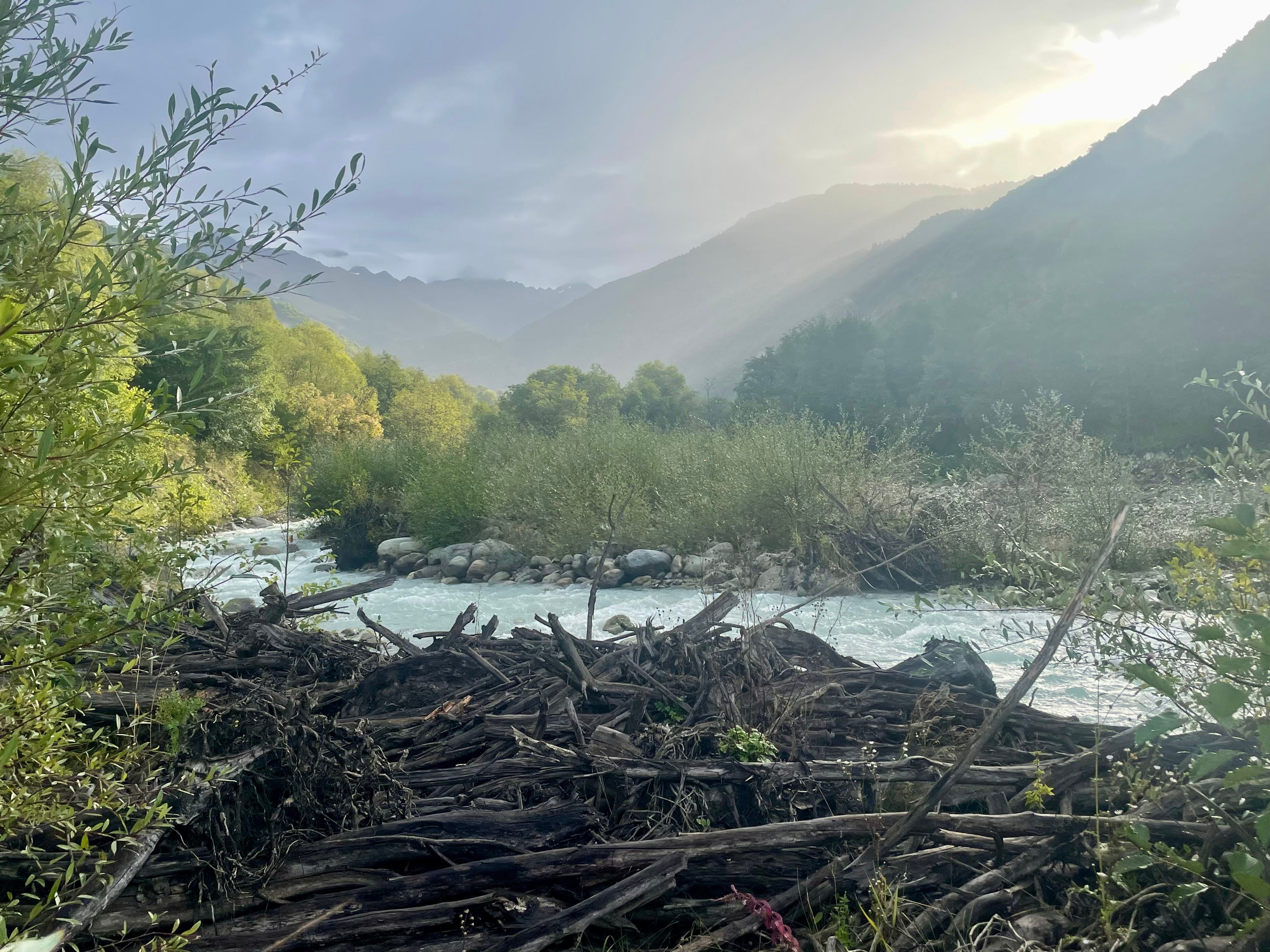
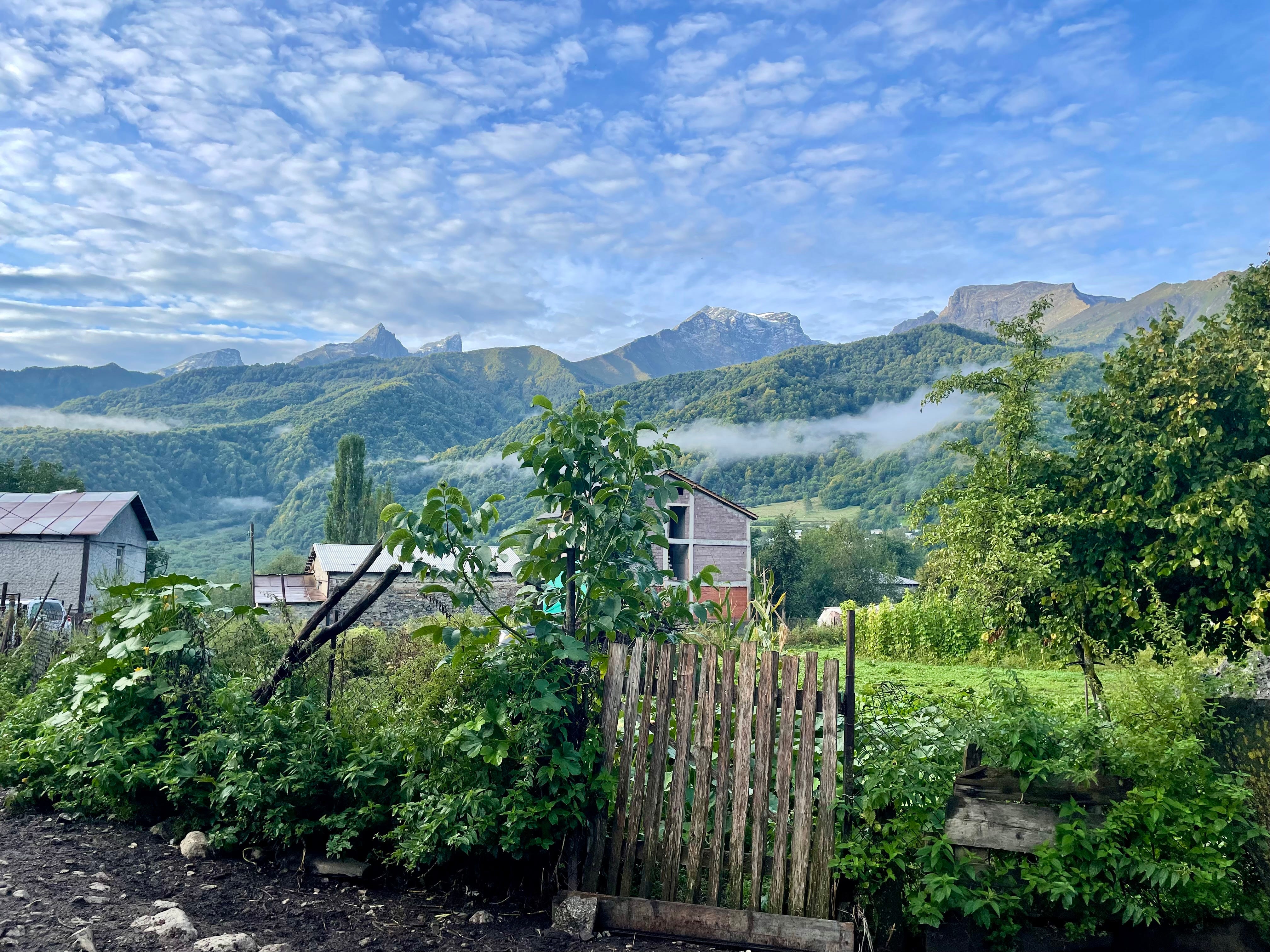
The drive from Oni to Ghebi was beautiful. The road followed a river that snaked between two mountain ranges, and jagged snow-capped peaks jutted up across the landscape, interrupting the rolling sea of trees showing the earliest signs of Fall. The town of Ghebi was a modest village with a small school, a church, and two tiny stores. Pigs and cows roamed the narrow dirt roads making the town their farmyard. We learned later that the town had experienced sharp and severe depopulation beginning in the mid-1980s, leaving behind many abandoned homes.
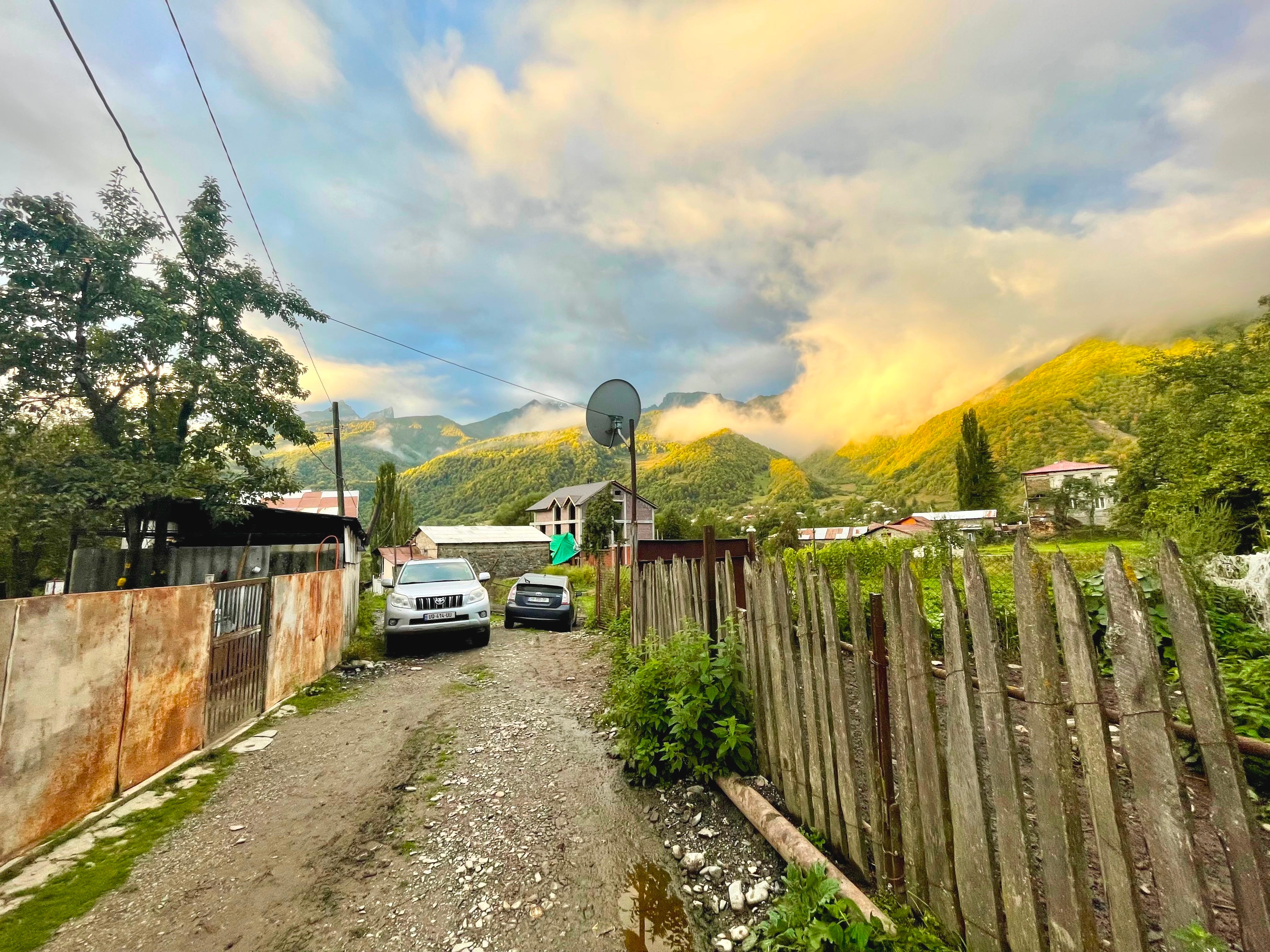
Gosia’s house was a few blocks from the entrance to Ghebi. When we pulled into her dirt driveway we were greeted by Kasha, a smiling Polish guest, and Jordan, the awkward 33-year-old American volunteer who––perhaps even more than the Georgian people––was the bane of Gosia’s existence.
Jordan was one of the more average people I’ve met in my life. He was from Phoenix, a former truck driver, and a lover of all things organic. It was his first time traveling and working on a farm, but by the time we arrived, he was well-versed in Gosia's world. He was quiet and simple, yet, he seemed to be the pinnacle of everything Gosia hated. Whenever something went wrong, which for Gosia was all the time, it was Jordan’s fault. The goats were hungry––Jordan didn’t take them out long enough. Ian put the wrong amount of food in the rabbit cage––Jordan had taught him wrong. The water wasn’t hot enough? Kurva Jordan didn’t put enough kurva wood into the kurva fireplace.
Before long, Ian and I had been initiated into Gosia’s hierarchy, which we came to understand both through her actions and at times her direct words. At the top of the list were the animals (although cigarettes were constantly jockeying for that position), then her guests, then the cleanliness of her house, then her neighbors, then us… then Jordan. She would often tell us that humans were the worst animals and showed her pigs more affection than us.
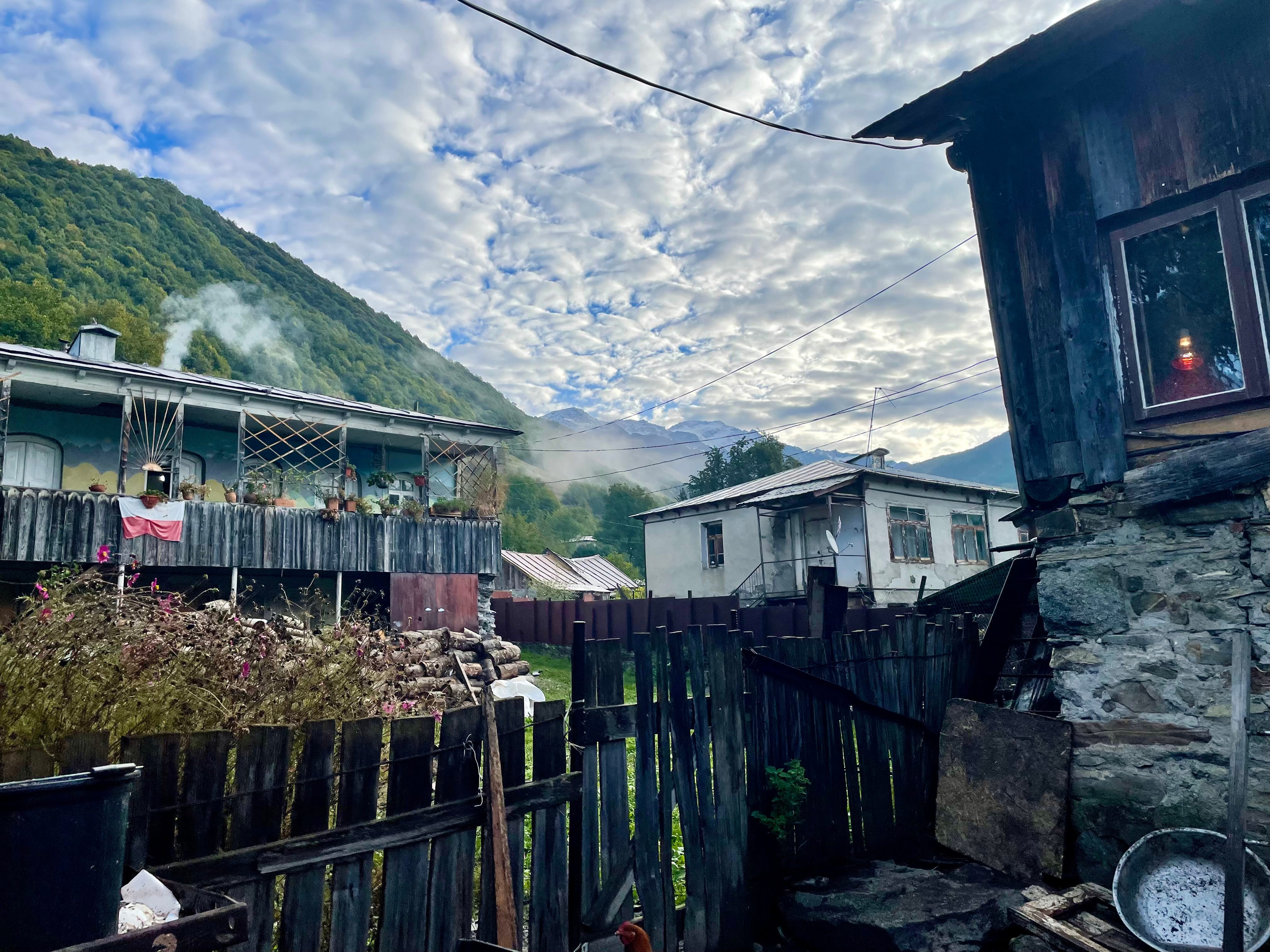
On our first morning at the farm, we were introduced to the cast of characters we would be looking after for the next few weeks. There were about ten ducks, a few turkeys, pigeons, chicks, and a half-dozen chickens––Ian and I’s favorite of which we named Houdini due to his uncanny ability to escape from the most secure of pens and evade our capture. The birds lived in a two-story coup with multiple areas inside, and could be heard at all hours of the day squawking and flying into the chicken-wire fences.
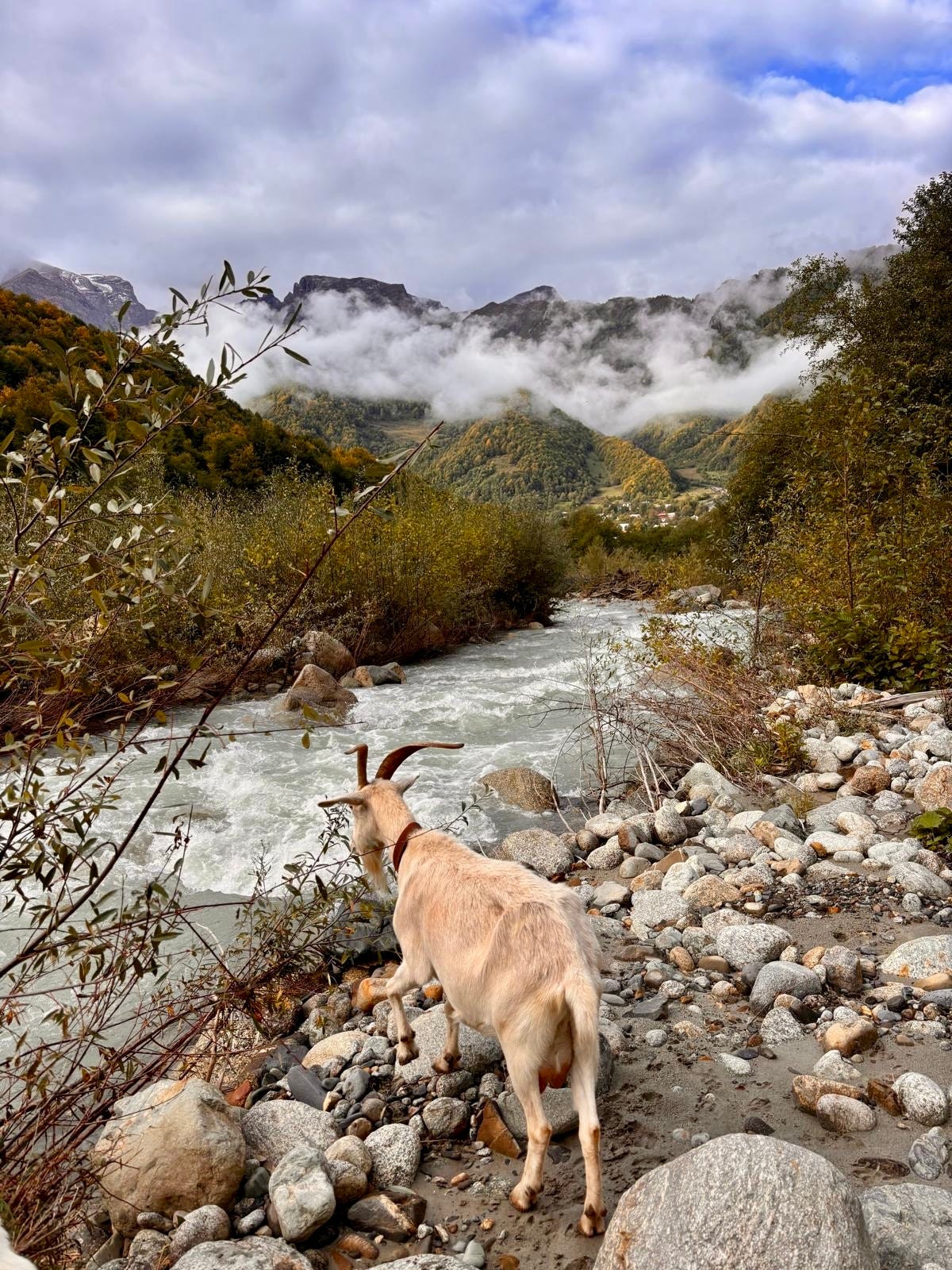
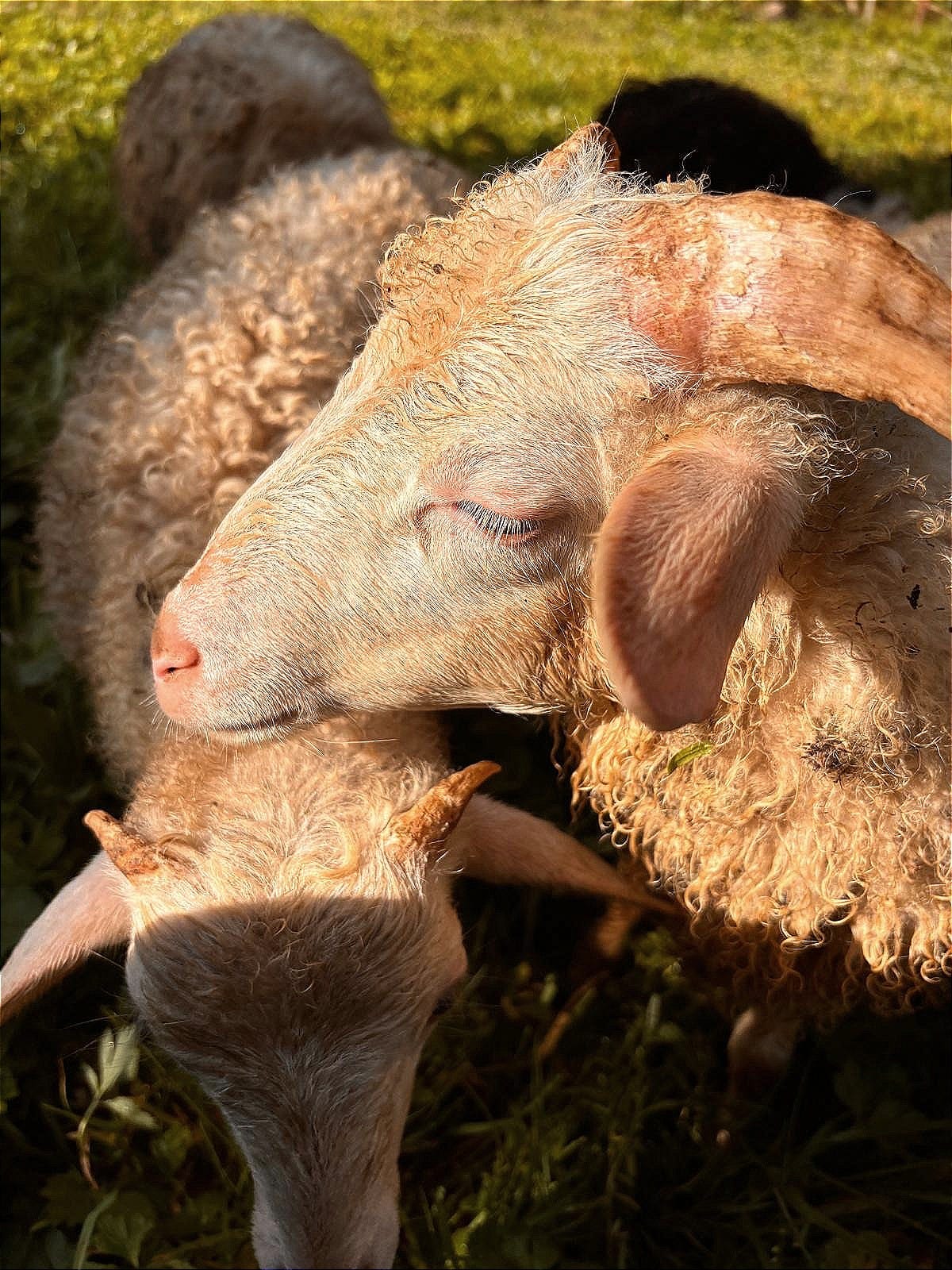
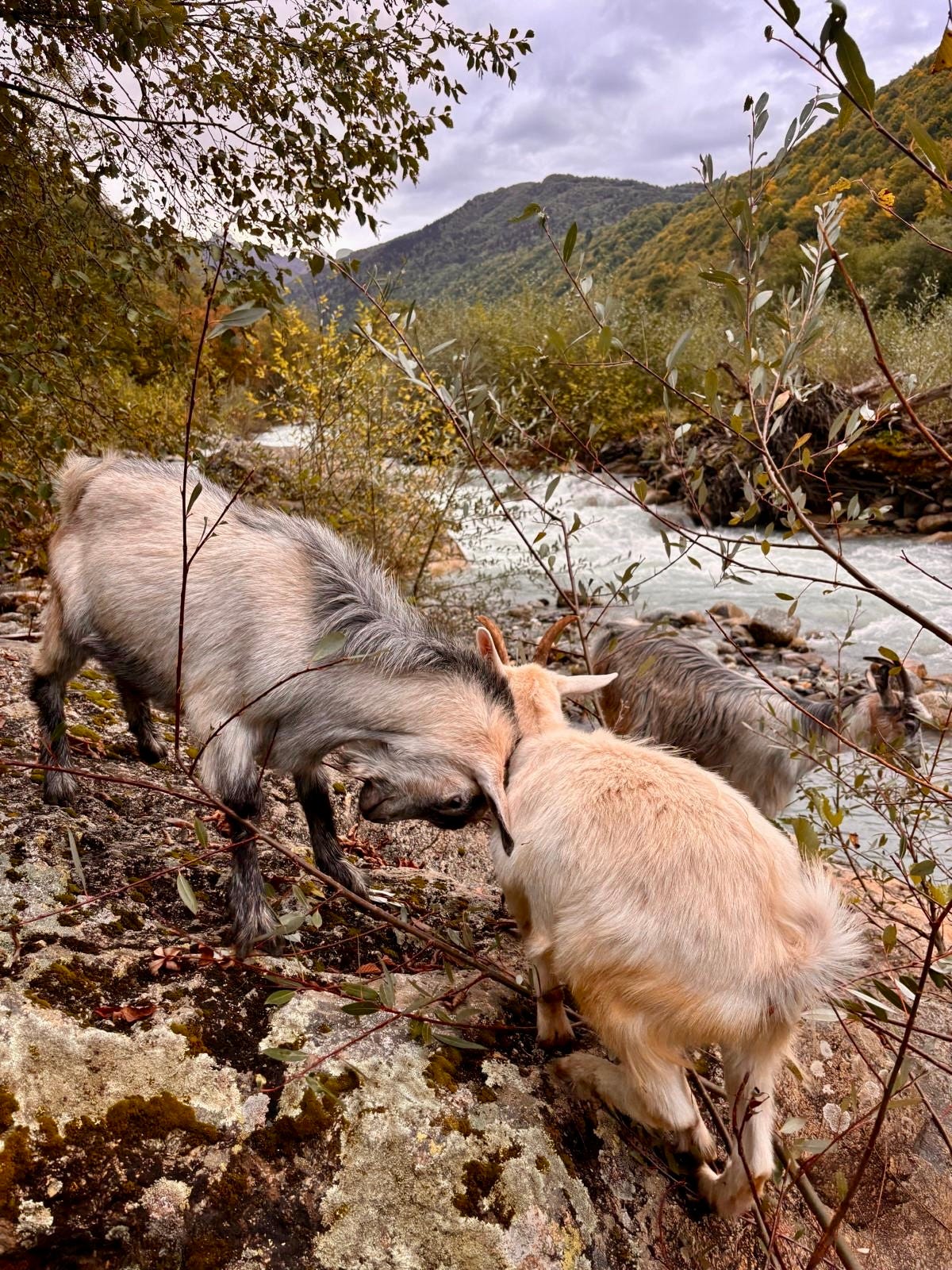
Gosia had seven sheep, overseen by a ram who ruled ruthlessly, constantly rearing up and slamming his horns into the others. There were five goats, led by Luba, a white doe with long curved horns who was constantly corralling the other goats and keeping Gikoos in line. Gikoos was the youngest goat and sole male, and would always challenge Luba for power by sprinting in front of the other goats to assert dominance. He seemed to lack any attention-span however, as he would constantly get distracted rubbing his head against my leg or licking himself. The sheep and goats lived next to each other in a small barn made out of bricks that emitted a scent that will likely never leave our clothes. It was situated under the granary, which constantly spilled barley and seeds through the hand-laid floorboards.
For Ian and I, the animals that entertained and awed us most with their savagery, were the pigs. At the helm of the ship was Freju, the largest pig in Ghebi, who when we arrived was on probation for the stunt he’d pulled the week before when he had somehow escaped his pen. The incident embroiled the entirety of Ghebi and its neighboring town in a hunt for the 700-pound boar that lasted five days and four nights. Gosia would constantly hear from neighbors that he’d been spotted, but Freju was able to elude her. The chase ended when the culprit was finally caught eating walnuts (his greatest vice) from the yard of a farmer in the next town over.
His sister Osheshkova––named after the Polish novelist, Eliza Orzeszkowa––lived on the other side of the yard. She had six piglets, yet displayed absolutely no motherly instincts. She would throw her babies out of the way if they were in front of her and her sacred slop. When Ian or I would try to get her back into her pen she would indignantly snort and waddle away, throwing fits if we got too close. We soon had to factor a 30-minute buffer time into our schedule just to get her back into her pen.
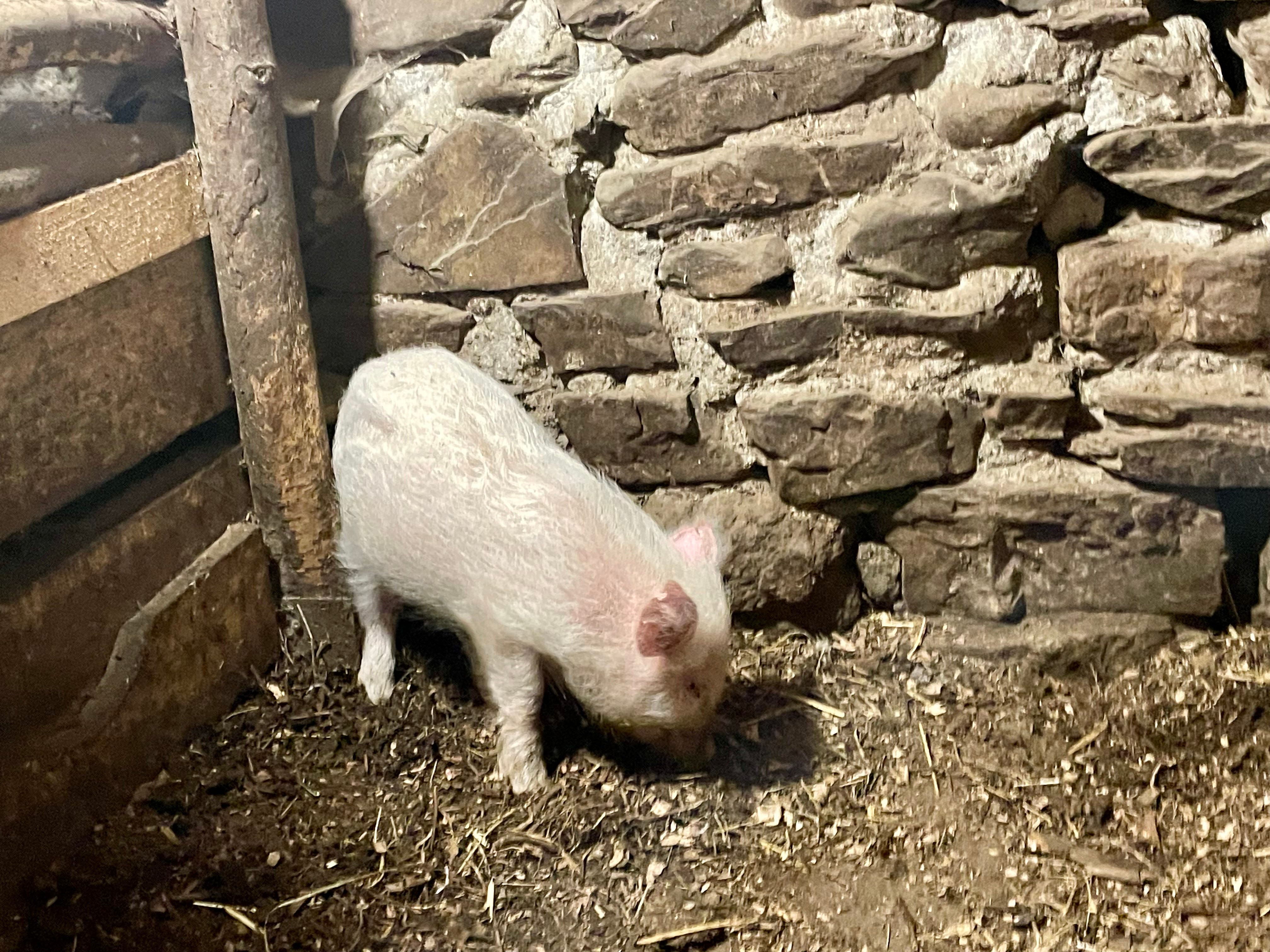
Our favorite pig was Antonoff, a tiny two-week-old pink piglet who Gosia had rescued from a town two hours away. He would scream and sprint in circles whenever one of us got close and would only quiet when he was slurping his slop.
Working conditions under Gosia were as unpredictable as her mood. Some days they would teeter on abuse––we could go ten hours working without food, just to be rewarded with an outburst over the cleanliness of the bathroom floor (housekeeping, cooking, and driving were quickly added to our list of tasks). She would routinely tack on extra jobs with seemingly no notice, like when I ravenously came inside one afternoon for what I thought was going to be my first meal of the day just to be informed that I would drive her car two villages away to Omari (her neighbor and the handyman of the town) and walk back four kilometers in the beating sun. She often seemed to be shrouded in a dense cloud of rage, keeping us constantly on edge. Her mutterings and outbursts could be heard through the thin walls of the house and knew no pause.
Other times, however, Gosia would display touching acts of kindness. She once embraced us both proclaiming “I love you guys” when we had completed our daily chores to her liking––though her superb mood had likely arisen from banishing Jordan from Serigala that morning. She would occasionally bring us treats: dark chocolate, eclairs, and other pastries after long days of work, and on particular occasions, she'd share her favorite homemade drink: melted mint chocolate with scotch.
One time, when she found out we had an acoustic guitar, she decided that we would play for the group of guests coming to the house for a soupra (a traditional Georgian feast) the next day. So she gave us the task of coming up with a twenty-minute setlist interpreting songs by System of a Down and the Polish flamenco guitarist phenom, Marcin Patrzalek, in under 24 hours during our “free time.” The next day, minutes before twenty-seven Polish debt collectors poured into her small home for the feast, the setlist time was revised to forty minutes.
After our performance, where choruses were extended and beats-per-minute reduced drastically, Gosia beamed and the room declared a toast. For the twenty-seven Poles, that meant chanting as Ian and I chugged two full glasses of red wine on empty stomachs.
The morning after, Gosia entered our room with breakfast, still smiling and teasing us for our drunkenness the night before. She asked us how many tips we’d made and let out a “kurva” when we showed her our meager earnings. “They don’t know how to tip,” she said, and placed a 100 GEL bill in front of us, easily doubling what the guests had left.
She initiated us into our work with a reminder that would amuse and haunt us through our trip. “I see everything,” she would tell us at different points, either when we made a mistake or did something good. She was right, our every move was surveilled and memorized as we became subjects of her scrutiny. She made us laugh at the same time, though. One evening Ian and I ran out of wood planks we were using to lay new floorboards in the pigpens––in attempts to correct Jordan’s shameful mistake of feeding the pigs in their pens rather than in the yard, which led them to “eat the floor” thinking it was food. Knowing her neighbors had some scrap wood, Gosia went to ask them for a plank. She ran back into the farmyard cackling and holding as much wood as she could carry, educating me that “in Georgia, when neighbor give you permission, you take as much as you can.”
There was an effect that the farm felt like it had on all of us. The physical labor of course brought on fatigue, and Ian and I’s incredibly rudimentary vocabulary made it almost impossible to interact with anyone apart from hand gestures and sounds. We connected more with the goats and pigs than the townspeople. The deterioration of our communication seemed to accompany the accumulation of filth on our bodies and the manner in which we ate. We would suck down the food that increasingly came to resemble the slop we fed to the pigs more hunched and with more barbarity every day.
At the same time, we were quicker to become angry with Gosia’s antics and the pigs’ disregard of our attempts to lure them back into their pens, but also quicker to move on to the next thing. Our lives came to revolve more around our own “feeding time.” We became products of the farm, rooted and devoted to its space and rhythms, and day by day our senses of superiority and distinction from the farm animals ebbed. Ian joked to me one day while one of us was kneeling in pig feces and the other greedily scarfing down a pear we found on the ground, that we were “just the animals in charge.”
I was interrupted by Kasha one afternoon while I was portioning the pig slop and scolded for using one of the kitchen ladles. “This is for the humans,” she said, “if we use this we will not be able to tell who are the pigs and who are the people.” I laughed. That question had long left my mind.
September 28, 2024:There is an isolation you feel here, but not necessarily a bad kind. One that detaches you from your world just enough to give your thoughts of other people and places less groundedness. They just matter a little less here. You lose your past… neighbors and animals need something from you right now. It doesn’t matter that we don’t speak the same language. I matter insofar as I can lift Omari’s table; as much as I am holding the pig’s slop or the goat’s branches. I’m not anybody to anyone here. And that is freeing. The stories and narratives I hold about myself melt away. It doesn’t matter that I am in Georgia, thousands of miles away from home, because here there is no other place than right here. Nothing beyond the mountains, nowhere that the river comes from or goes to. You are suspended in a way that time is more identifiable by how cooked the pig slop is, when the last time you grazed the sheep was… Time and place are untethered from their meanings and importance, and little by little you are freed from yours too.
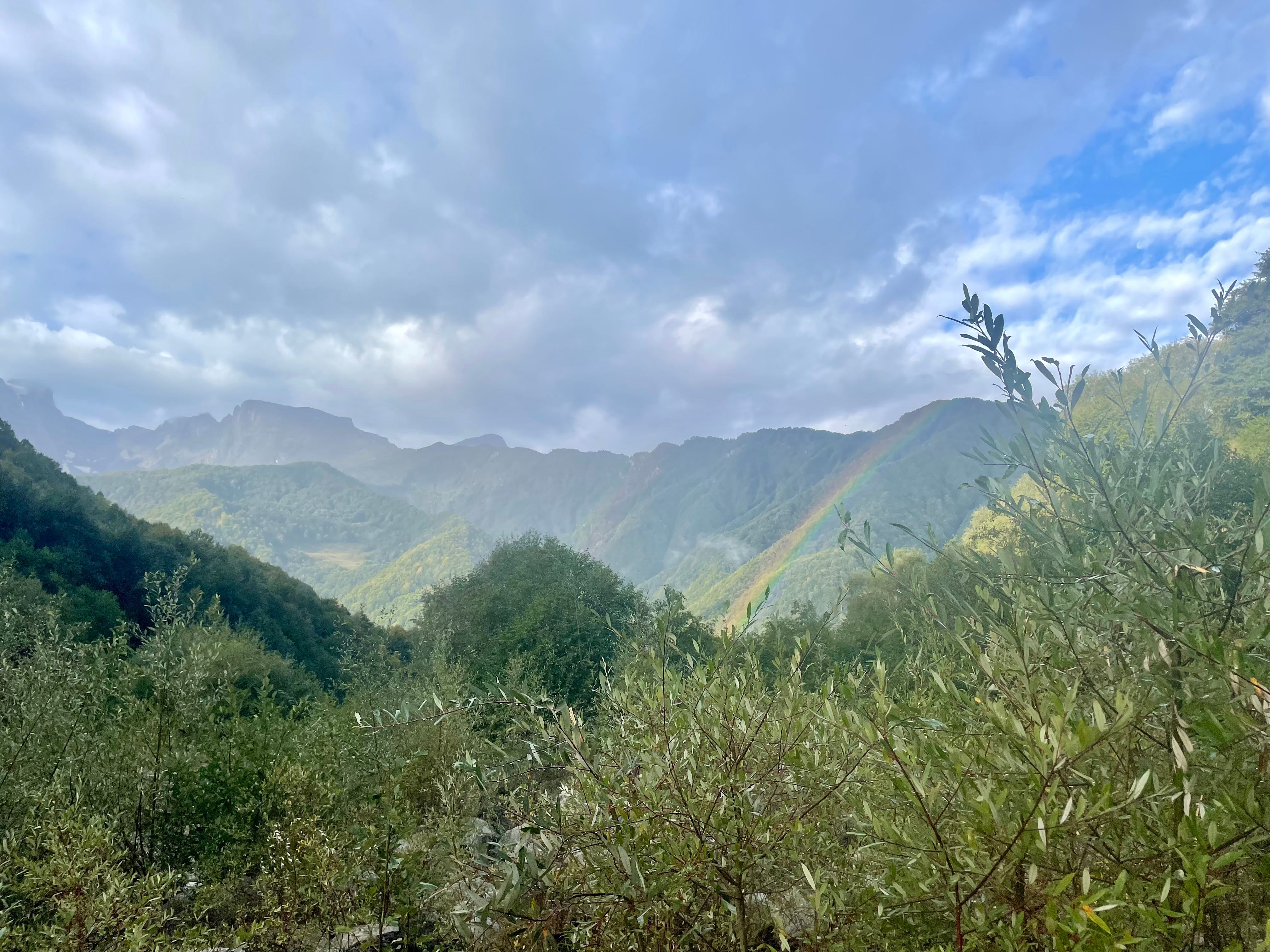
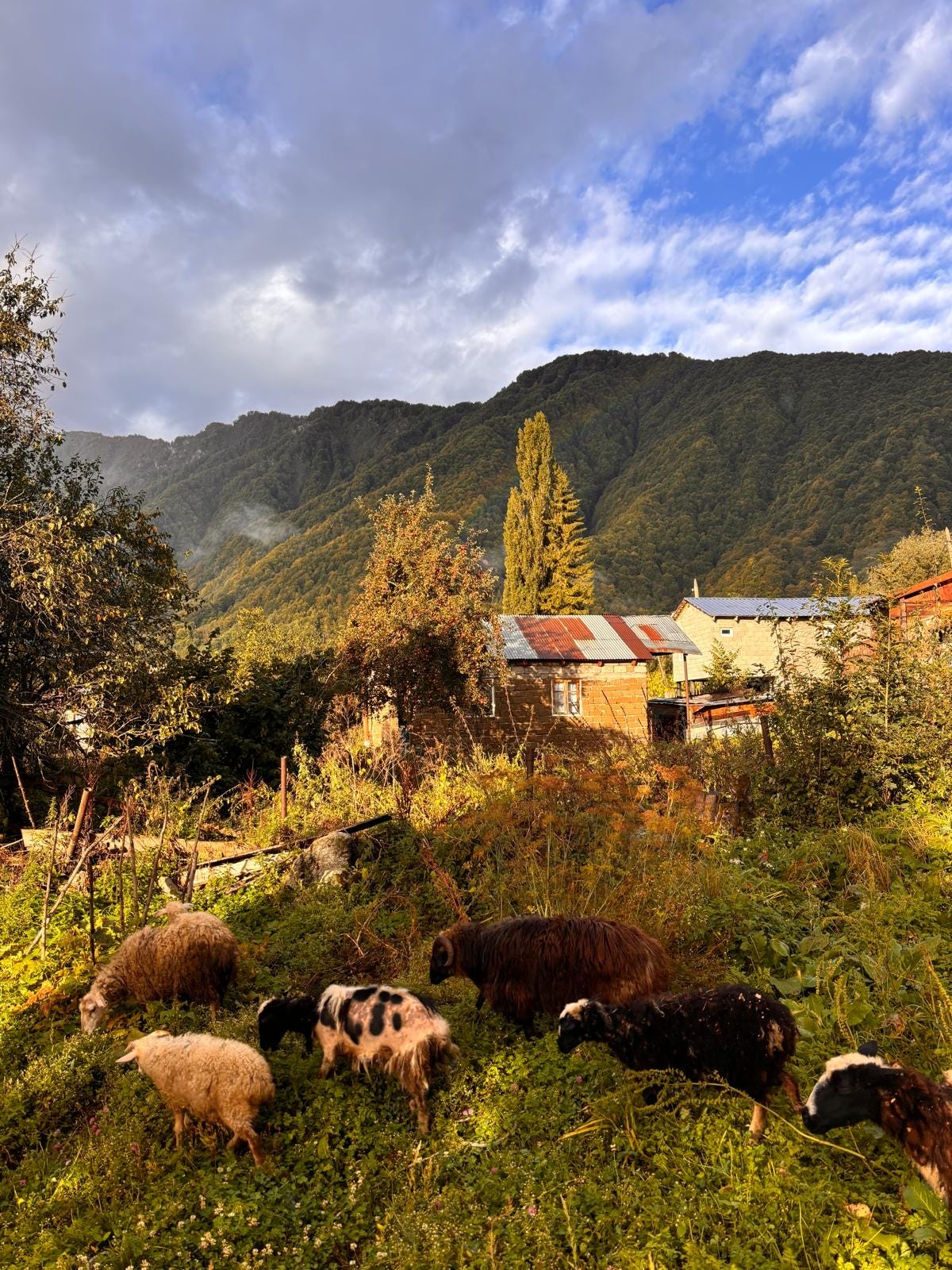
About a week into our stay, after the soupra, Gosia told us that she would be leaving for a few days with a tour group and that we would be in charge of running all operations on the farm. A part of Ian and I were nervous, we knew how Gosia got when things were not done to her liking, and she'd become increasingly more despotic in the days before her departure. But we were mostly excited, Gosia’s rapid oscillations between anger and damnation to praise and warmth were impossible to anticipate and would drain Ian and I, and work was never over until we were asleep––she would burst into our room at 10:00 pm with requests and demands. She never stopped working herself, consistently getting four hours of sleep, and her suffocating work ethic hung like fog over the farm, consuming all of us in its expectations and wrath.
From the moment she left, a calm silence fell over Ghebi. The week-long rain and cold finally broke into four days of brilliant sunlight and warmth, and the air felt lighter. Ian and I split duties between ourselves and worked hard, but made sure we had a few hours in the middle of the day to rest. For the first time, we explored the town, which had always felt just beyond our reach, constantly dangled in front of our noses just to be ripped away by Gosia’s neverending list of tasks.
In our newfound free time, we would bask in the sunny yard, musing about heartbreak and Ian’s favorite philosopher, Giorgio Agamben, perpetually cracking walnuts. We would wander out into Ghebi, paying visits to the shop and running from barking dogs, being careful to weave around the pigs sprawled out in the middle of the dirt roads. Townspeople stared at us, unsure what to make of two Americans so far from home. We found an old church at the top of a hill in the neighboring town with a view of the entire valley and its towering mountains and remarked on their imposing peacefulness.
We spoke about Gosia too, she was a perplexing character for us. We knew nothing about her past, why she had left Poland nine years before to come to Georgia, or how she had built her business. Our only clue to her past was a picture of a man in his mid-thirties that hung on the wall of our room. We gathered that he had died in a mountaineering accident, but his relationship to Gosia was a mystery. He could have been a friend, a brother, or a son––his smile resembled Gosia’s slightly––but it was ambiguous exactly as to when the photo was taken.
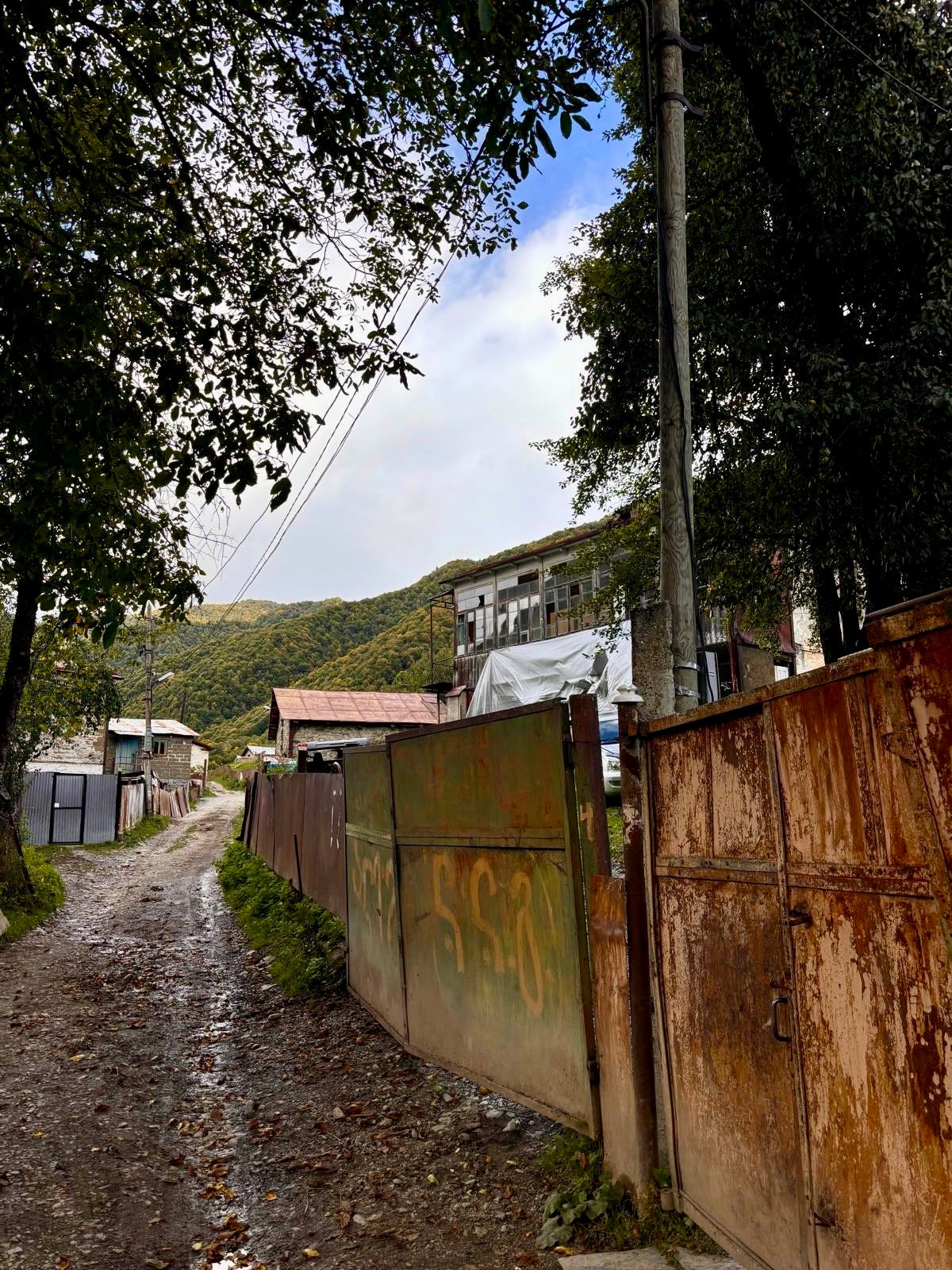
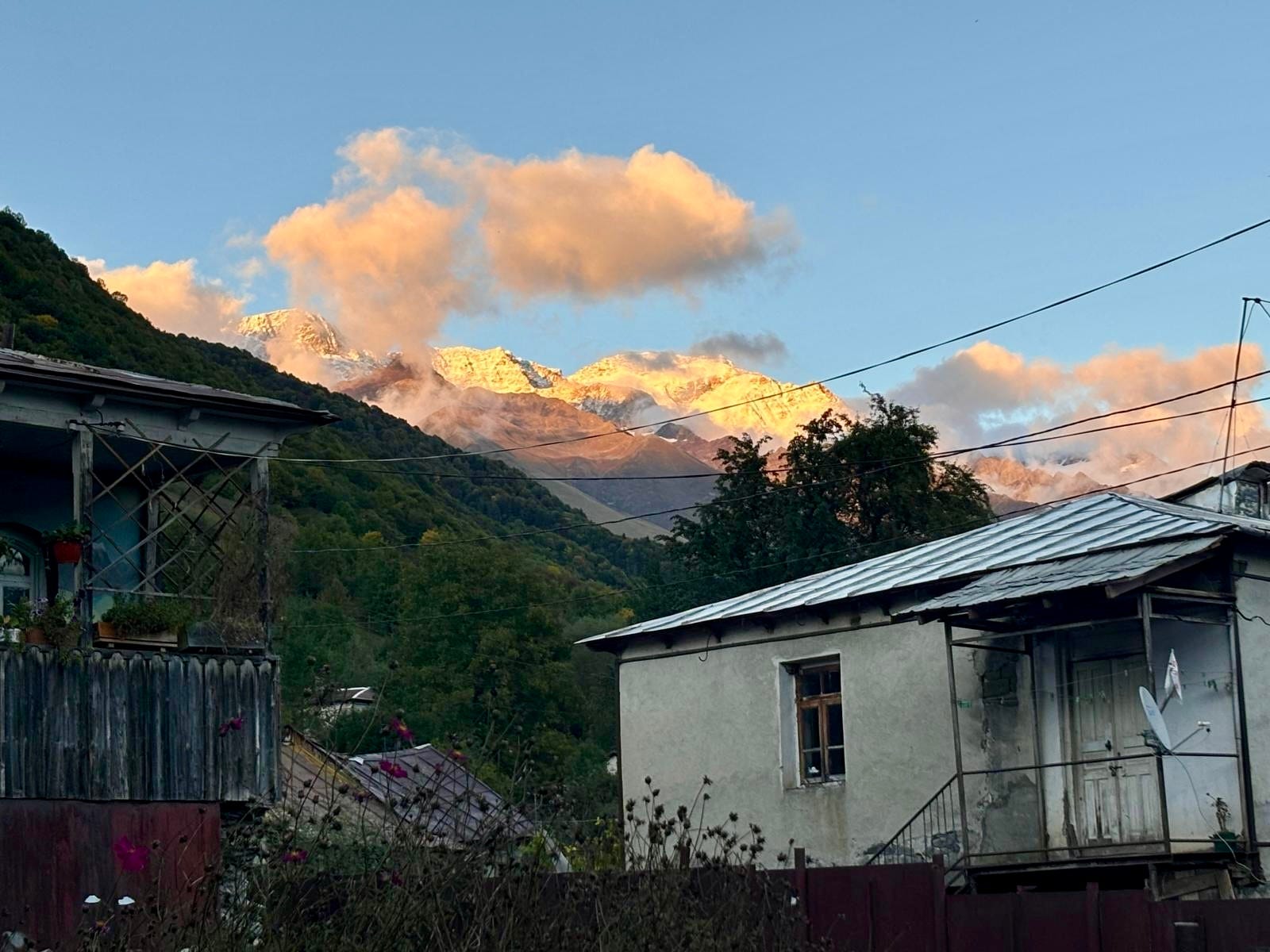
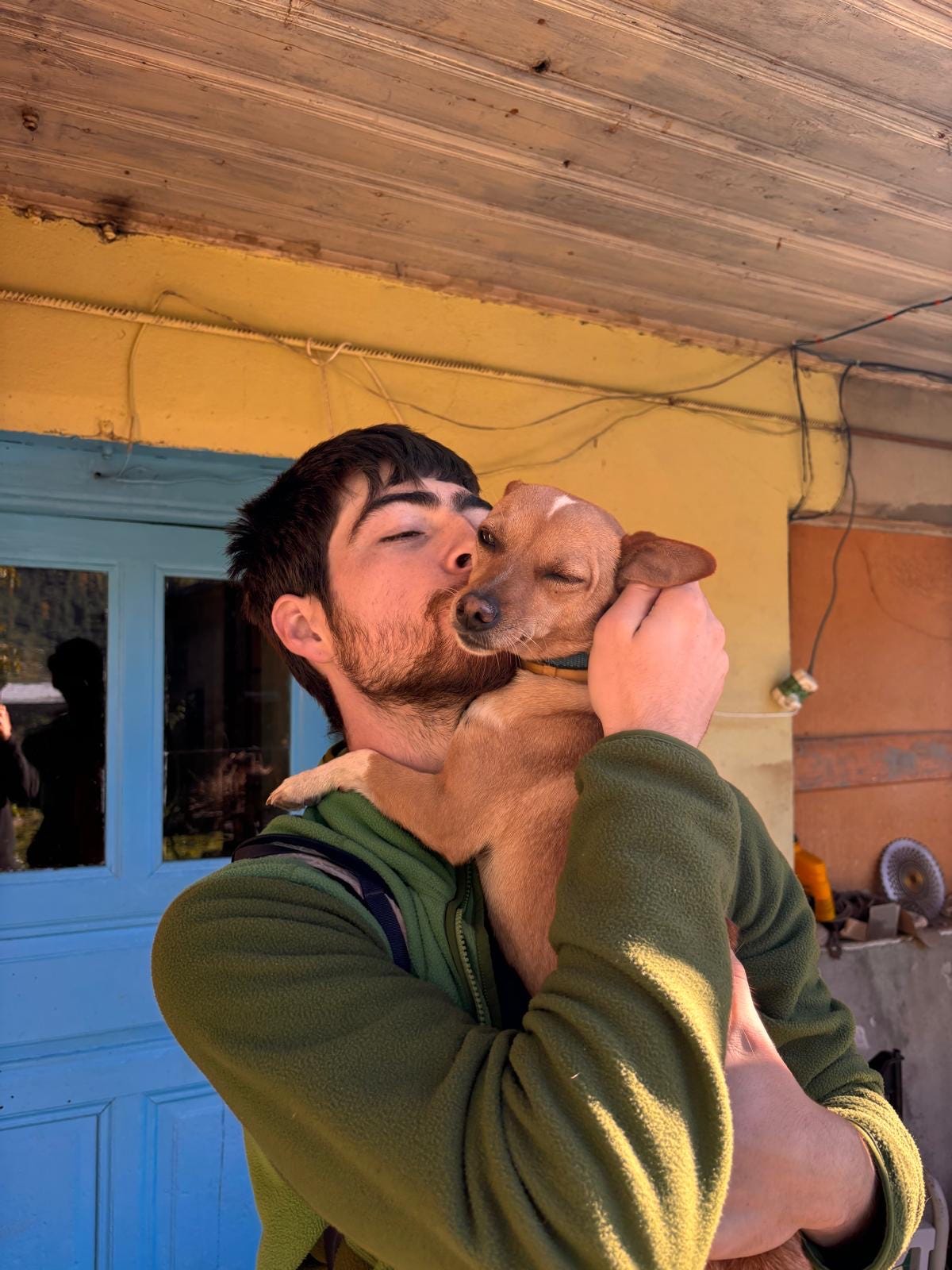
Gosia returned from the trip with the biggest smile we’d seen, rejuvenated by the mountains and time away from those kurva Georgians with her compatriots. We held our breath as she glanced at everything––the sheep and goats, the kitchen, the bathroom, and the shower Ian had spent the entire morning scrubbing determinedly. She embraced us both as we let out a sigh of relief. That night we drank and ate rabbit with more Polish guests and everyone was in a jovial mood.
But as we learned in Ghebi, sunny days do not last forever.
Gosia had promised us that we would only work the morning after the guests left and that our three-day weekend would begin that afternoon. We had been worked thirteen days in a row, straight through the first weekend that hosts are supposed to guarantee their volunteers. As Ian and I lay down in our room after our last shift and breathed a sigh of relief, we heard a commotion outside.
I walked out to the deck and looked down at the yard. The goats were out where they should not have been, and the clouds had coalesced over the village for the first time in almost a week. I saw Gosia emerge from behind the pig shed wearing a look of pure rage. Ian and I knew she was overworked––she hadn’t taken a break since we’d arrived. I reluctantly called out to her, asking if she needed help. I knew the floodgates I was inevitably opening, but I still felt empathetic to our host.
“Get down here right now.” She was evidently not sharing my compassion. I made my way down the stairs slowly, feeling a mix of anxiety and aggravation at the verbal ambush I was knowingly walking into. I slowly put on my work boots and grabbed a pair of gloves off of the work table. The sun had lowered behind the mountains to the west and a cold chill was settling over the valley. I walked through the gate and closed it carefully behind me. My movements were precise and methodical, both in an attempt to procrastinate what was about to happen and to forestall any future admonishment.
The farm yard was unrecognizable compared to how we had left it that morning. There was shattered glass on the ground, the birds were running wild, and Fortuna, one of the goats, was bleating lethargically in the corner. Gosia’s face was disfigured with rage.
“Explain to me how––” she paused, looking to the sky with theatrical incredulity, “how it is that you tell me you walk the goats twice a day, and they are like this?” She motioned to Luba’s lower abdomen, to the deep pockets around her pelvis and tailbone. “I go to them and they were crying because they are STARVING!” Her voice shook as it rose in pitch and her tone became imbued with condemnation. “Look at Fortuna. Look. She DYING.” She pointed to Fortuna who was indeed heaving, her eyes slowly closing, and her head hanging down. Bees were flying around her, and Gosia started raking her fingers aggressively through the goat’s hair. Her face reddened, and not knowing where to direct her fury, she started screaming and hitting Fortuna’s side wildly. “What did you do to her? What did YOU DO??”
I felt indignation boiling up in my chest. I was fed up with the disregard Gosia continually showed for Ian and my own needs, and I was tired of her erupting at us constantly. All of the farm animals had been completely normal when we handed the reins over to her that morning, and I had grazed the goats more frequently in the last three days than we had at any other point in our stay. I looked her in the eyes and shrugged in a quiet and aggrieved resignation. “I don’t know,” I answered apathetically.
She let out a huff and grabbed Fortuna by the horns, dragging her towards the goat pen and motioning for me to come with her. I followed, and when Gosia got to the pen, she dropped to the ground with the goat. She pulled the water bucket in front of Fortuna, who was now unable to stand, her eyes almost completely closed. “Drink, Fortuna, DRINK!” Gosia screamed at the goat. She grabbed her horns and dipped her head into the bucket. Her mouth didn’t even open. Gosia threw the bucket to the side, as if it was refusing to give the goat the water, and pulled Fortuna close. Her stone face broke for the first time, and she started to sob.
Everything changed immediately. Gosia, the source of my ire and resentment transformed in front of my eyes. Her screaming softened and her grip loosened on Fortuna’s horns. She petted the goat softly, futilely coaxing life back into her. Tears rolled down her face. I knew what the goat meant to Gosia, but I saw for the first time that it meant something more. It was her livelihood, yes, but Gosia’s tears were not for herself. They were for Fortuna, for the life that was slowly slipping away through her grasp.
At that moment, all of the antics of the prior two weeks did not matter. Nothing did. I knelt down to the floor of the pen, indifferent to its filth. There was silence for the first time, but I felt overwhelmed by Gosia’s pain, by Fortuna’s pain, by Death’s looming and hollow presence. For that brief moment, we were just three souls sitting on the woodchip-laden floor of the goat pen. Gosia’s petting stopped and she held Fortuna to her chest, tears still running down her face. She looked at her goat with a tenderness and love I had never before seen in her eyes.
The four other goats had entered the pen and stared on with the most control and alertness I’d ever seen from any of them. They were crying too, bleating at me, at Gosia, and into the air. It didn’t matter that we were humans and they were goats. We all knew what was happening. We all knew that each other knew. We all instinctively knew what death looked like, and we all understood that it was at work.
September 30, 2024:I feel like I’ve lived lives here. Ghebi is such a simple and peaceful place. Random farm animals. Random farmers. A single store selling hair dye, peanuts, and beer. But life happens so forcefully here. Rage, gluttony, filth, death. It breaks down all barriers and reduces us all to the same thing. It reminds you how similar you are to everything around you: a Polish farmer, a pig, a goat.Right before Fortuna died, Ian and I followed a stream of blood down a long road in Ghebi. A stream that wound around rocks, around cars, and climbed uphill. It varied in color, sometimes pink, sometimes red, blossoming with the silt it pulled into its current. We followed it to its beginning. To where it abruptly stopped. It billowed up from the ground, rising out of the Earth’s crust. There was no animal in sight––it would have been too much blood for just one.
The next morning, we awoke to the sounds of the house we’d become so used to. A bang. A KURVA! The creaking of doors and the low heaving of someone descending the metal staircase. I rubbed my eyes. “Another untenable catastrophe,” Ian said with cynical sarcasm. The farm had forgotten about the night before, things were as they always had been.
Ian and I had decided that it was time to leave, our work period was over and the weather forecast looked bleak for Racha. We felt we had gotten all that we could out of the experience.
“I wonder… How does your brain work??” Gosia asked me when we emerged from our room, all of the tenderness from the night before gone from her eyes. I had put the cat litter in a bin a few days before and forgotten to ask her where to put it. I started to answer but it was clear she’d asked not to hear my response, but as an opportunity to berate me. This reconfirmed our decision.
As we packed our bags into her trunk, she approached us with a two-liter bottle of beer and an amused look on her face. Ian and I had split a bottle of hers while she was gone, and had replaced it with another one, feeling like we should have asked before taking it. “I see everything,” she cackled, “you guys didn’t have to do that. Take it with you.” She handed us the bottle and gave us another for good measure.
She rounded the car to climb into the driver’s seat but paused. She turned to Ian and me and asked, “Do you know what Serigala means?” We shook our heads and looked at the farm for one last time, taking in the significance of our experience there. “It means wolf, that's what some Indonesians told me.” She let out her gremlin-like cackle and got into the car.